

Seven Coins, One Pug: A Safe Endoscopic Rescue
A Guide to Foreign Body Ingestion in Dogs
Foreign body ingestion is one of the most common veterinary emergencies seen in dogs. This article tells the story of Boun — a curious 4-year-old Pug who swallowed seven coins — and provides essential information for pet owners about the risks of swallowed objects, how to recognize the signs, and what modern veterinary endoscopy can do to help.
Boun’s Story
Boun, a 4-year-old Pug with an inquisitive nature, was brought to the International Veterinary Hospital (IVH) after his owner noticed several days of concerning symptoms: persistent coughing, frequent panting, and a complete loss of appetite. His owner recalled that Boun may have swallowed something a few days earlier — and that suspicion turned out to be exactly right.
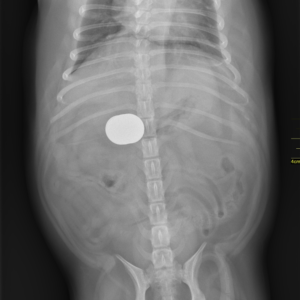
Upon examination, Boun was alert and responsive but visibly uncomfortable. An X-ray was performed immediately, and what it revealed was striking: a clear metallic structure inside his stomach. The imaging confirmed that something unusual — and potentially dangerous — had been ingested and was sitting in his digestive tract.
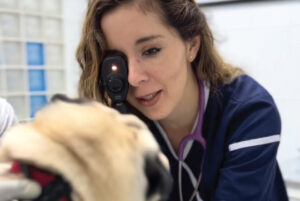
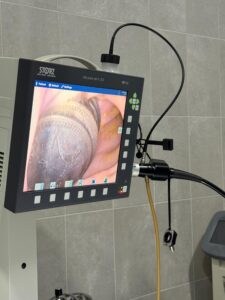
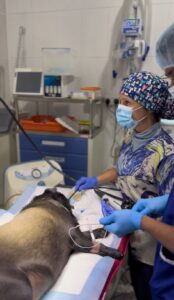
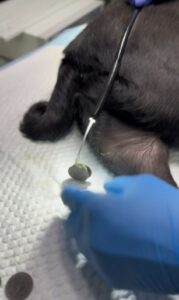
Dr. Eliane Gamonal recommended an endoscopic procedure to both investigate and remove the object. Endoscopy is a minimally invasive technique that allows veterinarians to visualize the inside of the digestive tract using a small, flexible camera and to retrieve foreign objects using specialized tools — all without the need for open surgery.
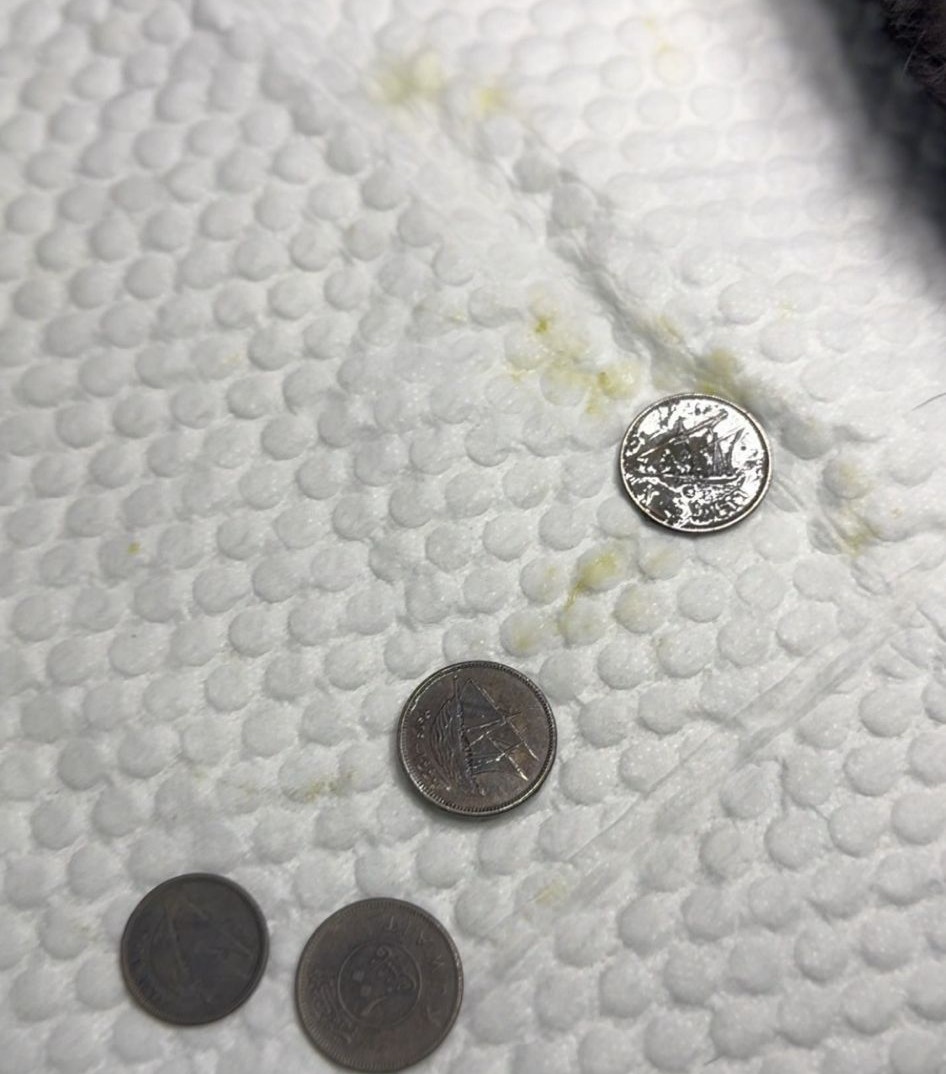
What the team discovered during the procedure was both unexpected and remarkable: Boun had swallowed not one, but seven coins — five 100 fils coins and two 50 fils coins, all stacked together inside his stomach. Using the endoscope, Dr. Gamonal carefully and successfully retrieved every single coin without complications.
Following the procedure, Boun was closely monitored to ensure he was stable and recovering comfortably. After just one day under observation, he showed significant improvement and was discharged to continue his recovery at home. His case is a powerful reminder of how quickly and quietly foreign body ingestion can become a serious emergency — and how a fast, skilled veterinary response can make all the difference.

Why Do Dogs Swallow Foreign Objects?
Dogs explore the world primarily through their mouths. Unlike humans, who rely on sight and touch to investigate new objects, dogs use their noses and mouths first — sniffing, licking, and chewing are their primary tools of discovery. This natural behavior makes them highly vulnerable to accidentally ingesting items that catch their interest, particularly small, shiny, or smelly objects.
Puppies are especially prone to swallowing foreign objects during their exploratory phase, but adult dogs of any age can fall victim to the same behavior. Pugs, like Boun, are known for their inquisitive and sometimes indiscriminate eating habits, making them particularly susceptible. Common items swallowed by dogs include coins, buttons, batteries, toys, socks, bones, corn cobs, fruit pits, hair ties, and jewelry. The danger varies depending on the object’s size, shape, and material — but any foreign body in the digestive tract carries risk.
Types of Ingested Foreign Bodies
Coins and Metallic Objects
Coins are particularly dangerous because certain metals — especially zinc, found in many modern coins — are toxic when exposed to stomach acid. Zinc toxicity can cause severe damage to red blood cells, leading to hemolytic anemia, kidney failure, and potentially death. Even coins without significant zinc content can cause obstruction or injury to the gastrointestinal tract if not promptly removed.
Sharp Objects
Needles, pins, bones, skewers, and other sharp items pose a risk of perforation — tearing through the wall of the esophagus, stomach, or intestine. Perforation is a life-threatening emergency that requires immediate surgical intervention and carries significant risk even with prompt treatment.
Soft or Fabric Objects
Socks, underwear, toys, and other soft items are among the most commonly swallowed foreign bodies in dogs. While they may not cause toxic injury, they can form obstructions in the intestine that prevent the normal passage of food and waste, leading to serious illness if not addressed.
Linear Foreign Bodies
String, thread, tinsel, and similar items are especially dangerous. One end can anchor in the stomach while the other travels into the intestine, causing the bowel to bunch up or saw through the intestinal wall. Linear foreign bodies almost always require surgical intervention.
Batteries
Button batteries can cause severe chemical burns to the esophagus and stomach within hours of ingestion. Any battery ingestion requires immediate emergency veterinary care.
Recognizing the Symptoms
The symptoms of foreign body ingestion in dogs can vary depending on what was swallowed, where it is lodged, and how long it has been there. In Boun’s case, the coins had been in his stomach for several days before his owner brought him in — during which time his discomfort steadily worsened. Knowing what to look for can help pet owners act sooner.
Early Signs
- Sudden loss of appetite or refusal to eat — one of the most consistent early signs
- Repeated attempts to vomit, or actual vomiting — especially if the object is stuck in the esophagus or stomach
- Excessive drooling, gagging, or retching
- Pawing at the mouth or face
- Restlessness, pacing, or signs of abdominal discomfort
Signs of a More Serious Problem
- Persistent or worsening vomiting, especially if blood is present
- Bloated or distended abdomen that is painful to the touch
- Lethargy, weakness, or sudden collapse
- Pale or yellowish gums — which may indicate internal bleeding or toxicity
- Straining to defecate or complete absence of bowel movements
- Fever or signs of systemic illness
Early Intervention: Why It Matters
In cases of foreign body ingestion, timing is everything. An object sitting in the digestive tract for hours or days can shift from a manageable problem to a life-threatening emergency. Obstructions can cause the bowel to lose blood supply within 24–72 hours. Toxic metals like zinc begin leaching into the bloodstream as soon as they contact stomach acid.
In Boun’s case, the coins had been in his stomach for several days. Coins in the stomach are somewhat more accessible than those in the intestine and may remain there without causing an immediate obstruction — but the risk of zinc toxicity was real, and prompt endoscopic removal was essential. Pet owners who act quickly when they suspect ingestion — even before symptoms appear — give veterinarians the best possible chance of resolving the situation with minimal intervention. If you see or suspect your dog has swallowed something, call your veterinary clinic immediately.
Prevention: Keeping Your Dog Safe
The best outcome in any case of foreign body ingestion is the one that never has to happen. While it is impossible to prevent every accident, there are practical and meaningful steps pet owners can take to reduce risk significantly:
- Keep small objects — coins, buttons, hair ties, jewelry, batteries — off floors and low surfaces where dogs can reach them
- Store bags, purses, and backpacks out of reach, as dogs often investigate and chew through them to access the contents inside
- Supervise dogs closely during play, especially with toys that have small parts that could be chewed off and swallowed
- Choose appropriately sized toys — toys that are too small for your dog’s breed create a choking and ingestion hazard
- Dispose of food waste carefully, as bones, corn cobs, fruit pits, and packaging can all become dangerous foreign bodies
- Be especially vigilant during the holiday season, when tinsel, ornaments, ribbon, and food wrappers are more prevalent in the home
- Train your dog in the ‘leave it’ and ‘drop it’ commands — reliable obedience responses can prevent ingestion in the moment it matters most
Diagnosis and Treatment
When foreign body ingestion is suspected, the diagnostic process typically begins with a thorough physical examination and review of the dog’s history — including whether the owner witnessed or suspects ingestion. From there, the most common next step is imaging.
Imaging
X-rays (radiographs) are the first-line imaging tool for suspected foreign body ingestion. They can readily identify metallic and dense objects — as was the case with Boun’s coins. Soft or non-metallic objects may require additional imaging, such as ultrasound or contrast radiography, where a dog swallows a special dye that highlights the digestive tract on X-ray.
Endoscopy
Endoscopy is the preferred treatment for foreign objects that are accessible within the esophagus or stomach. A thin, flexible tube equipped with a camera and retrieval tools is passed through the mouth and into the digestive tract under general anesthesia. The veterinarian can visualize the object directly, grasp it with specialized forceps or a basket, and remove it — all without a single incision. Recovery is significantly faster than surgical alternatives, and the risk of complications is much lower.
Endoscopy was the ideal solution for Boun. His coins were located in the stomach, accessible to the endoscope, and could be retrieved cleanly. The procedure was performed safely, and Boun was able to go home the following day.
Surgery
When a foreign object has passed beyond the stomach into the intestine, or when it is too large or awkwardly shaped to be retrieved endoscopically, surgery becomes necessary. A gastrotomy (opening the stomach) or enterotomy (opening the intestine) allows the surgeon to remove the object directly. In cases of perforation or bowel necrosis, more extensive surgery may be required, including removal of damaged intestinal segments.
Watchful Waiting
In some cases — typically when a very small, smooth, non-toxic object has been swallowed and the dog shows no symptoms — a veterinarian may suggest monitoring to see if the object passes naturally. This approach is never appropriate for sharp objects, batteries, or coins, and should only be undertaken under direct veterinary guidance.
Frequently Asked Questions
Q: What should I do if I think my dog swallowed something?
A: Contact your veterinarian or an emergency animal hospital immediately, even if your dog appears fine. Do not try to induce vomiting at home unless explicitly instructed by a vet — for sharp objects, this can cause further injury. Time matters, so act quickly rather than waiting for symptoms to develop.
Q: Are coins dangerous for dogs?
A: Yes, especially coins containing zinc, which leaches into the bloodstream when exposed to stomach acid and can cause hemolytic anemia and organ damage. Even coins without significant zinc content pose obstruction risks. Any suspected coin ingestion should be treated as an emergency.
Q: How is endoscopy different from surgery?
A: Endoscopy uses a flexible camera passed through the mouth under anesthesia — no incisions, faster recovery, and lower complication rates. Surgery involves opening the abdomen and is necessary when the object is beyond the reach of the endoscope or has caused internal injury requiring direct repair.
Q: How long does endoscopic recovery take?
A: Most dogs recover quickly. Many, like Boun, are ready to go home within a day of the procedure. There may be mild throat irritation or temporary nausea from anesthesia, but serious complications are uncommon. Your vet will advise on any dietary or activity restrictions during recovery.
Q: Can a swallowed object pass on its own?
A: Sometimes very small, smooth, non-toxic objects pass without harm — but this is never guaranteed, and the risks of obstruction, toxicity, or perforation are too serious to leave to chance. Always consult your vet before assuming an ingested object will pass safely on its own.
Q: Are certain breeds more prone to swallowing foreign objects?
A: Any dog can swallow a foreign object, but puppies, highly food-motivated breeds, and curious or anxious dogs tend to be seen most frequently. Labradors, Beagles, and Pugs — like Boun — are among the breeds commonly associated with foreign body ingestion due to their exploratory and indiscriminate eating behaviors.
Conclusion
Boun’s story is a remarkable one — seven coins, one small stomach, and a veterinary team ready to respond with precision and care. What could have become a prolonged and dangerous illness was resolved in a single endoscopic procedure, allowing Boun to go home just one day later, healthy and on the road to full recovery.
Early action by Boun’s owner — bringing him in when symptoms appeared rather than waiting — made all the difference. If you ever suspect your dog has swallowed a foreign object, do not wait for symptoms to worsen. Contact your veterinarian immediately, describe what may have been ingested, and follow their advice. The sooner the situation is assessed, the more options are available — and the better the outcome for your pet.
— Dr. Eliane Gamonal, Veterinary Surgeon —
International Veterinary Hospital (IVH)