

Max’s Story: Overcoming a Life-Threatening Lung Tumor
A Guide to Lung Tumors in Dogs
Lung tumors in dogs are among the most serious diagnoses in veterinary medicine. This article tells the story of Max — a 10-year-old Husky who overcame a life-threatening lung tumor — and provides essential information for pet owners about tumor types, symptoms, prevention, and treatment options.
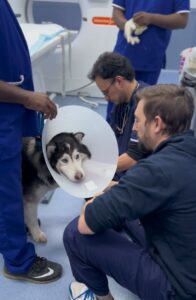
Max’s Story
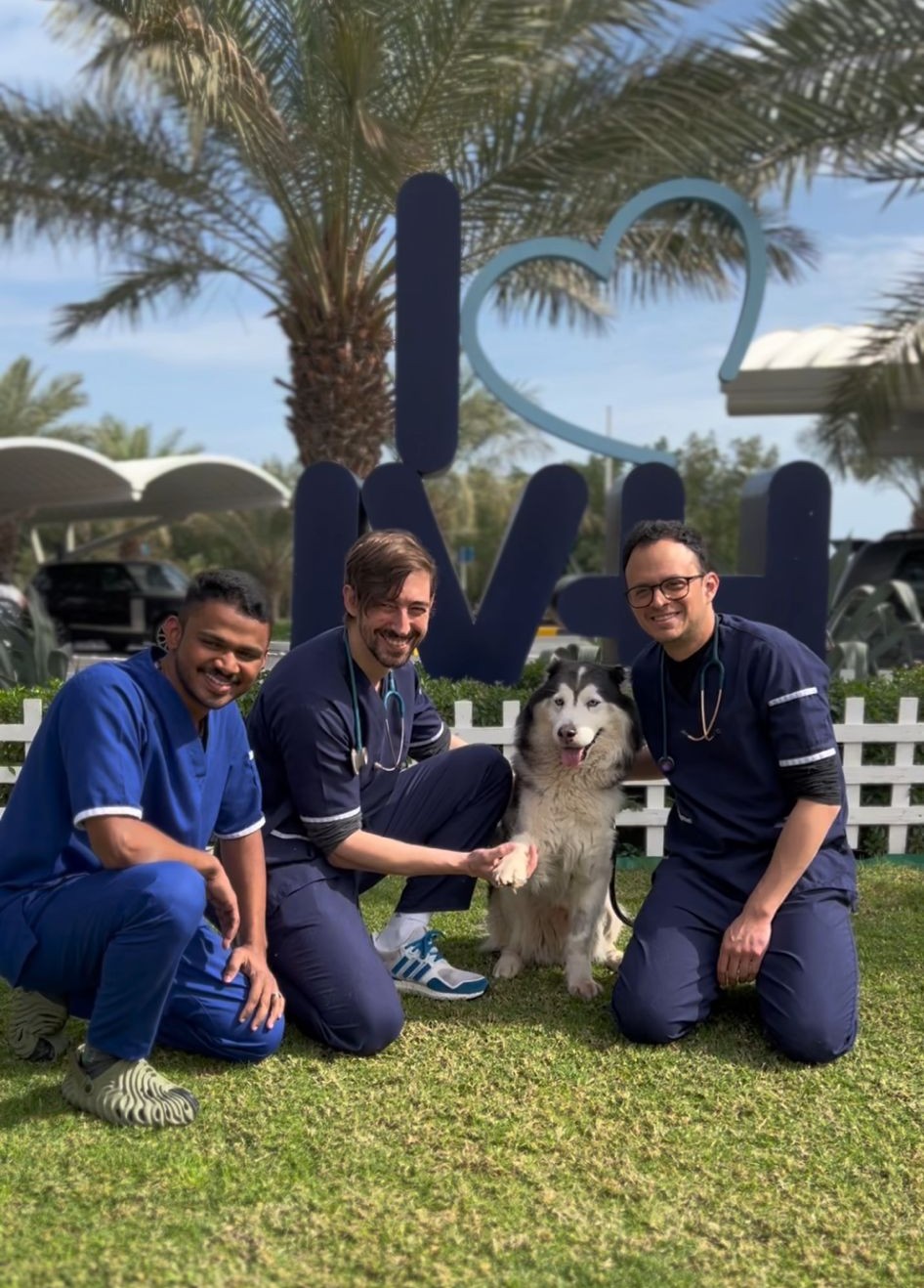
Max, a 10-year-old Husky full of personality and spirit, was brought to IVH after struggling with a severe respiratory condition for over eight months. He had been experiencing a persistent cough — sometimes accompanied by blood — which was deeply concerning for his family. Despite seeking help elsewhere, his condition continued to deteriorate, and his owners were growing increasingly desperate for answers.
From the moment Max arrived, our team initiated a comprehensive diagnostic approach. His case required close collaboration between multiple hospital departments: Imaging, for advanced radiographic and CT analysis; Laboratory, for bloodwork and pathology; Internal Medicine, for overall health evaluation; Cardiology, to assess heart function ahead of anesthesia; and Surgery, for the definitive intervention. This multidisciplinary effort ensured that every aspect of Max’s condition was carefully evaluated and that no risk was overlooked.
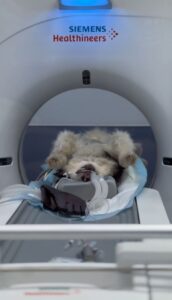
Advanced imaging, including a high-resolution CT scan, revealed the underlying cause: a significant lung tumor. While the diagnosis was serious, it was also clarifying — for the first time in eight months, the team had a definitive answer. After thorough evaluation of the CT findings, laboratory results, and Max’s overall health status, surgical intervention was recommended as the best path forward.
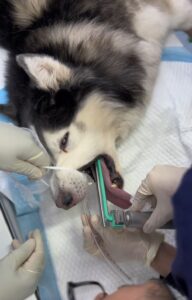
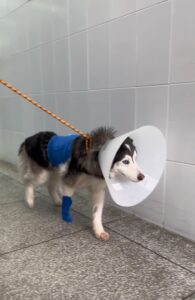
Max underwent a pulmonary lobectomy — the surgical removal of the affected lobe of the lung — a complex and technically demanding procedure performed by Dr. Julio Montes, with Dr. Trajano Naranjo managing anesthesia and cardiovascular stability throughout. Following four hours of close ICU monitoring and five days of dedicated hospital care, Max was strong enough to return home. A sample of the tumor was sent for histopathological analysis to guide any further care. His follow-up visits have shown very encouraging progress, and he continues to recover well.
Max’s journey highlights the importance of early investigation, advanced diagnostics, and a coordinated medical approach. Most of all, it reflects the impact of committed pet owners and a dedicated veterinary team working together toward the same goal. We are happy to see Max recovering well and wish him a continued, full recovery.

Types of Lung Tumors in Dogs
Lung tumors can be primary (originating in the lung itself) or secondary/metastatic (spreading from a cancer located elsewhere in the body). Primary lung tumors are relatively rare, accounting for approximately 1% of all canine cancers, though their incidence appears to be increasing as diagnostic capabilities improve and the pet population ages. Secondary tumors are far more common — the lungs receive an enormous volume of blood and are therefore a frequent destination for metastasizing cancer cells.
Adenocarcinoma
Adenocarcinoma is the most common primary lung tumor in dogs, making up approximately 75–80% of cases. It originates from the glandular epithelial cells lining the airways and can be further classified as bronchial, alveolar, or bronchioloalveolar based on its growth pattern. These tumors tend to be aggressive and may spread to regional lymph nodes and distant organs, which is why early diagnosis is so important.
Squamous Cell Carcinoma
Less common than adenocarcinoma, squamous cell carcinoma is nevertheless highly aggressive. It arises from the flat cells lining the airways, tends to develop centrally near the main bronchi, and is associated with significant local tissue invasion. Dogs with this tumor type often have a more guarded prognosis.

Carcinoid Tumors

Carcinoid tumors arise from neuroendocrine cells within the lung and are considered rare and generally slower-growing than the previous two types. While less aggressive, they are still capable of spreading over time and may produce hormones that lead to systemic effects beyond the respiratory system.
Metastatic (Secondary) Tumors
The lungs are one of the most common sites for cancer spread in dogs. Primary tumors of the mammary gland, bone (osteosarcoma), thyroid, and skin (particularly melanoma) frequently metastasize to the lungs via the bloodstream. Unlike primary lung tumors, which typically appear as a solitary mass, metastatic tumors usually present as multiple nodules scattered throughout the lung fields on imaging.
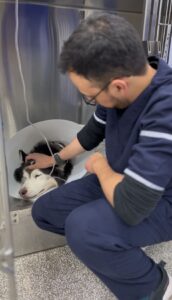
Symptoms to Watch For
One of the most difficult aspects of lung tumors in dogs is that symptoms often do not appear until the tumor has grown to a significant size. This happens because dogs are instinctively good at masking discomfort, and the lungs have a large functional reserve — meaning an animal can lose a considerable portion of lung capacity before showing obvious outward signs. By the time symptoms become noticeable, the disease may already be at an intermediate or advanced stage. This is exactly why awareness and regular screening are so critical.
Pet owners should be vigilant for the following warning signs, particularly in middle-aged and senior dogs:
Respiratory Signs
- Persistent cough that does not resolve with standard treatment — lasting weeks or months
- Coughing up blood or blood-tinged mucus (hemoptysis) — as seen in Max’s case
- Labored, rapid, or noisy breathing, including wheezing and abnormal lung sounds
- Exercise intolerance — tiring far more easily than normal during walks or play
- Open-mouth breathing or extended neck posture when resting, indicating respiratory distress
General Systemic Signs
- Unexplained, progressive weight loss over days to weeks
- Chronic fatigue, lethargy, and significantly reduced activity level
- Reduced appetite or complete disinterest in food
- Fever that does not respond to standard antibiotic treatment
- Muscle weakness, wasting, or sudden collapse episodes
Early Detection
Early detection is arguably the single most important factor in improving outcomes for dogs with lung tumors. When a tumor is identified before it has spread to lymph nodes or distant organs, surgical removal is far more likely to be curative. As the disease progresses, treatment becomes more complex, the chance of complete remission decreases, and the impact on quality of life grows.
Unfortunately, most cases are diagnosed at a relatively advanced stage — as with Max, who had symptoms for eight months before a diagnosis was made. This delay happens for understandable reasons: the symptoms are gradual, easy to attribute to other conditions like allergies or kennel cough, and not all general practice settings have the imaging equipment needed to detect a pulmonary mass early.
Dogs at higher risk include those over 10 years of age, large and medium-sized breeds, dogs with a history of other primary cancers, and those with long-term exposure to environmental carcinogens such as secondhand smoke. For these patients, annual or biannual chest X-rays during routine wellness exams can catch changes early, when interventions are most effective. CT scanning — used in Max’s case — offers even greater sensitivity and is the gold standard for pre-surgical planning.

Prevention and Risk Reduction
While there is no guaranteed way to prevent lung tumors in dogs — particularly since the root causes remain unclear in many cases — there are meaningful steps pet owners can take to reduce risk and support overall respiratory health:
- Eliminate secondhand smoke — dogs in smoking households face significantly elevated lung cancer risk, as they sit closer to the ground where carcinogens settle and process toxins differently than humans
- Reduce exposure to pesticides, herbicides, radon gas, and heavy diesel exhaust
- Use low-VOC cleaning products and ensure good home ventilation
- Maintain a healthy body weight and provide a balanced, antioxidant-rich diet to support immune function
- Schedule regular veterinary checkups, particularly for senior dogs over 8–10 years of age
- Treat primary cancers promptly and discuss with your oncologist whether lung surveillance imaging is appropriate

Diagnosis and Treatment
When a lung tumor is suspected, the diagnostic workup typically includes chest X-rays as a first step, followed by CT scanning for detailed anatomical mapping. Blood panels, urinalysis, and in some cases fine needle aspirate or biopsy provide additional information. Echocardiography — performed for Max — assesses cardiac function ahead of anesthesia, particularly important in older dogs or those with concurrent heart conditions.
Surgery (pulmonary lobectomy) is the treatment of choice for solitary primary tumors that have not spread beyond the lung. When performed successfully with clean surgical margins and no lymph node involvement, it offers the best chance of long-term remission. Studies indicate a median survival time of 12–20 months post-lobectomy, with some dogs living several years. Adjuvant chemotherapy may be recommended after surgery to reduce recurrence risk. For cases where surgery is not possible, palliative care — including pain management, anti-inflammatory medications, and oxygen support — can meaningfully maintain comfort and quality of life.
Frequently Asked Questions
Q: Can lung tumors in dogs be cured?
A: In some cases, yes. When a primary lung tumor is caught early, confined to a single lobe, and fully removed with clean surgical margins, long-term remission — and in some cases cure — is possible. Advanced or metastatic tumors are generally not curable, but treatment can meaningfully extend survival and preserve quality of life for months to years.
Q: Is a pulmonary lobectomy a safe surgery?
A: It is a complex, high-risk procedure that demands experienced surgeons, specialist anesthesia management, thorough pre-operative evaluation, and dedicated post-operative ICU care. In the right hospital setting — as was the case for Max — it can be performed with excellent outcomes. Risk increases in dogs with underlying heart or breathing problems, which is why pre-surgical cardiac evaluation is so important.
Q: How long is recovery after lung surgery?
A: Hospital recovery typically takes 4–7 days, during which the dog is closely monitored in the ICU and then in a general ward. Home recovery may take 4–8 weeks, with restricted physical activity, prescribed medications, and scheduled follow-up visits. Most dogs show steady improvement week by week, with energy and appetite gradually returning to normal.
Q: Does secondhand smoke increase lung tumor risk?
A: Yes, significantly. Veterinary studies have shown that dogs in smoking households are at considerably higher risk for lung cancer and other respiratory diseases. Dogs spend more time close to the floor, where smoke and carcinogens settle at higher concentrations, and they metabolize inhaled toxins differently than humans. Eliminating indoor smoking is one of the most protective steps any pet owner can take.
Q: What should I do if my dog has a persistent cough?
A: A cough lasting more than 2–3 weeks in a middle-aged or older dog — especially if it is worsening, accompanied by blood, or associated with weight loss or fatigue — warrants prompt veterinary evaluation. Chest X-rays are usually the first step, and referral to an internal medicine specialist or oncologist may follow depending on what the imaging reveals. Early action makes a real difference.
Conclusion
Max’s story is more than a case report — it is a reminder of what becomes possible when science, compassion, and commitment come together. From a dog who had been coughing for eight months, struggling to breathe and gradually losing his quality of life, to a patient recovering at home and making steady progress — his journey stands as a powerful illustration of modern veterinary medicine at its best.
At the International Veterinary Hospital, we believe that every animal deserves the highest standard of care, and that every pet owner deserves an honest, knowledgeable, and supportive partner in that journey. Cases like Max’s remind us why multidisciplinary teams, advanced imaging, and specialist expertise matter — not as abstract concepts, but as real tools that give real animals more time with the families who love them.
If your dog is showing any of the symptoms described in this article — a persistent cough, unexplained weight loss, difficulty breathing, or blood in mucus — please do not wait. Early detection truly saves lives. Contact your veterinarian, ask questions, push for answers, and advocate tirelessly for your companion. We are proud to have been part of Max’s story, and we wish him a continued, joyful, and full recovery.
— Dr. Julio Montes, Veterinary Surgeon | Dr. Trajano Naranjo, Anesthesiologist —
International Veterinary Hospital (IVH)