

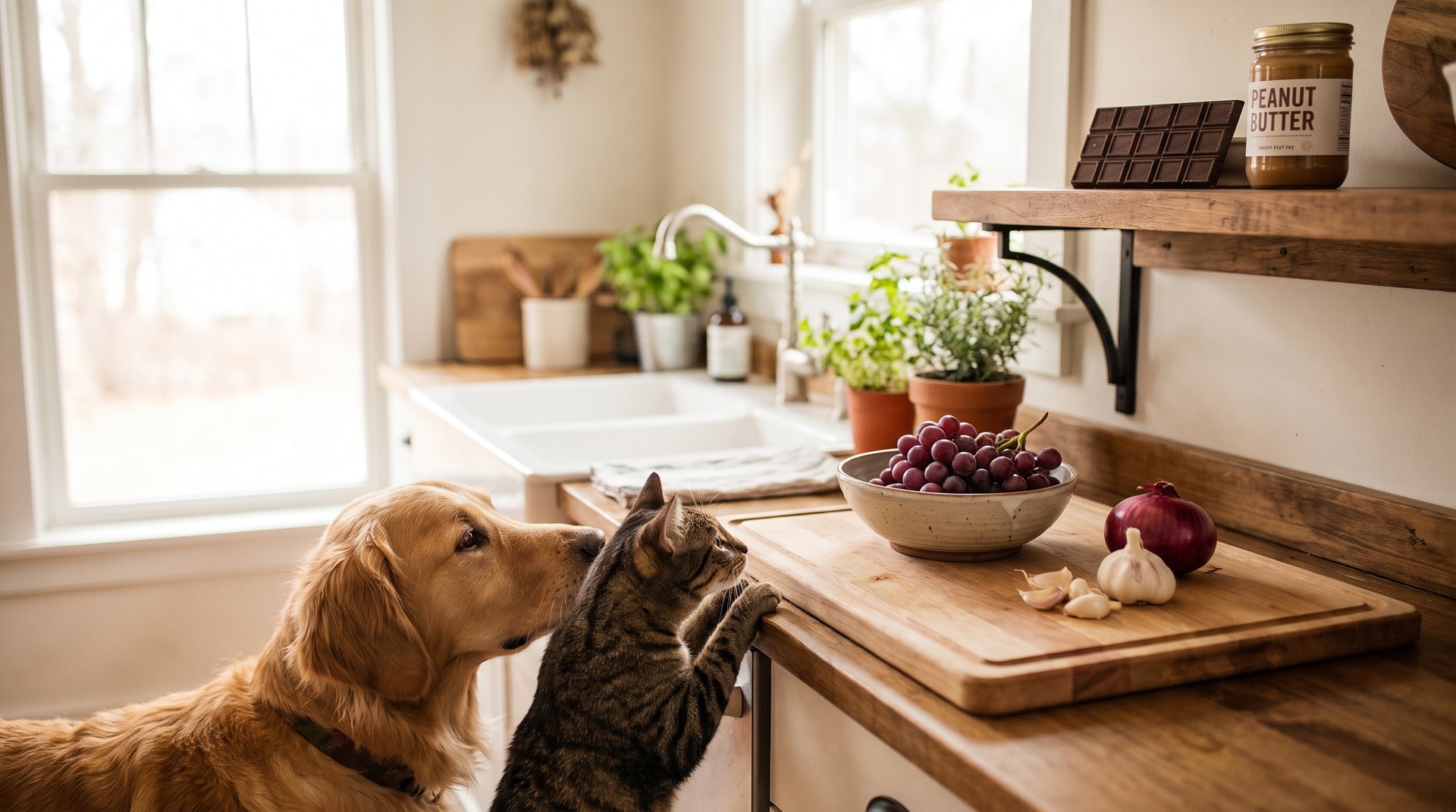
Some of the most dangerous foods for pets are not the ones you would expect. Everyday foods that are toxic to pets sit right on our kitchen counters in Kuwait, from the grapes in the fruit bowl to the onion and garlic in last night’s machboos. Many owners share a little of what they eat, thinking a small taste is harmless. With some foods it truly is not. This guide walks through the hidden dangers, the signs of poisoning to watch for, and exactly what to do if your cat or dog eats something they should not have.
One thing to keep in mind before we start: several of these poisons work slowly. Your pet can look completely fine for hours or even days while damage is building inside. So the goal is never to wait and see. It is to act early, before symptoms appear.
Grapes and Raisins: Small Fruit, Serious Kidney Risk
Grapes and raisins are one of the biggest surprises for dog owners. For years no one knew why they were poisonous. Scientists now point to tartaric acid as the likely cause. Dogs lack the transporters other animals use to clear this acid, so it builds up in the kidneys and can cause sudden kidney injury. Tartaric acid levels swing a lot from grape to grape, which is why the danger is so hard to predict.
There is no known safe amount. Trouble has been seen from as few as four or five grapes in a small dog. Raisins are more concentrated, so even less is risky. The same warning covers currants, which are just small dried grapes. Vomiting or diarrhea often shows within 6 to 12 hours, and kidney injury can develop within about 72 hours. Treat any amount as an emergency and call your vet right away, even if your dog seems fine.
Xylitol: The Sweetener Hiding in Gum and Peanut Butter
Xylitol is a sugar substitute, and it is one of the most dangerous things a dog can swallow. It tricks a dog’s pancreas into flooding the body with insulin, which crashes blood sugar. Higher amounts can cause liver failure. A single stick of sugar-free gum can hold enough to seriously harm a small dog. Low blood sugar can start within 10 to 60 minutes, while liver damage may show 12 to 72 hours later.
The tricky part is where it hides. Read the label before you share anything sweet or “sugar-free.” On labels it may be listed as “birch sugar” or E967, which are the same thing. Watch for it in:
- Sugar-free gum, mints, and candy
- Some peanut butters and nut butters, especially “natural” or sugar-free ones
- Sugar-free baked goods and protein bars
- Chewable vitamins and supplements
- Some children’s medicines, cough syrups, and certain toothpastes
Most big-brand peanut butters do not contain xylitol, but some do. Never assume. Check the specific jar in your cupboard before you let your dog lick the spoon.
Onions and Garlic: Toxic in Every Form, Even Cooked
Onions and garlic belong to the allium family, and every form is toxic. Raw, cooked, fried, powdered, and dried are all a problem. Powders and concentrates are the worst because they pack so much into a small amount, so onion powder, garlic powder, soup mixes, and baby food with onion are all risky. That means the garlic and onion cooked into biryani, machboos, stews, and sauces count too, not just a raw onion off the counter.
These foods damage red blood cells and cause anemia. Cats are more sensitive than dogs, and Japanese breeds like the Akita and Shiba Inu are more at risk. Please ignore the old myth that a little garlic is a healthy flea remedy. Garlic is actually more toxic than onion, not a safe supplement. The hard part is that signs are often delayed and can take several days to appear. Watch for:
- Weakness, tiredness, and low energy
- Pale or yellowish gums
- Fast breathing or a racing heart
- Red or brown urine
- Collapse in severe cases
Chocolate and Macadamia Nuts
Chocolate contains theobromine and caffeine, which pets cannot handle well. The darker it is, the more toxic. Cocoa powder and baking chocolate are the worst, then dark and semi-sweet, then milk chocolate, while white chocolate has very little. So yes, milk chocolate is less toxic than dark, but it is not safe. Signs usually appear within 6 to 12 hours and can last for days: vomiting, diarrhea, extra thirst, restlessness, panting, a racing heart, high body temperature, tremors, and seizures. Chocolate harms cats too, though dogs eat it far more often.
Macadamia nuts affect dogs in a strange way, usually within 12 hours. The classic sign is weakness in the back legs, sometimes to the point a dog cannot stand. You may also see tremors, wobbliness, vomiting, and fever. It is rarely deadly, and most dogs recover in a day or two with care. One extra danger in Kuwait’s gift boxes: many macadamia treats are covered in chocolate, which stacks two poisons together.
Avocado and Cooked Bones
Avocado is often overhyped as deadly for dogs and cats. In truth they are fairly resistant, and the flesh usually causes only mild stomach upset. The real risks for them are the large pit, which can choke a pet or block the gut, and the high fat, which can trigger pancreatitis. Birds and rabbits are a different story. Avocado can be fatal to them, so keep it well away if your household also keeps birds.
Cooked bones are never safe, whether chicken, lamb, beef, or fish. Cooking dries the bone so it splinters into sharp pieces. These can cut the mouth, crack teeth, get stuck, or even pierce the stomach or intestines, which leads to a life-threatening infection and often emergency surgery. Leftover bones from a family meal are a common cause of these emergencies. After a pet eats a bone, watch for:
- Gagging, drooling, or retching
- Vomiting or refusing food
- Bloody or black stool, or straining to pass stool
- A painful belly, or low energy
What to Do If Your Pet Eats Something Toxic
Stay calm and move fast. The steps below give your pet the best chance.
- Take your pet away from the food and clear away anything left.
- Note what was eaten, how much, and when. Keep the packaging, the label, and any vomit sample.
- Have your pet’s weight ready.
- Call your vet or a 24-hour emergency clinic straight away. Do this for grapes, xylitol, and onion or garlic before any symptoms show, not after.
One important warning: do not try to make your pet vomit at home on your own. For many of these poisons that is the wrong move and can cause more harm. Only do it if a vet or poison expert tells you to and guides the dose. Never make a pet vomit if it ate a bone or anything sharp, or if it is weak, collapsing, having a seizure, or struggling to breathe. Hydrogen peroxide should never be given to cats, as it badly damages their stomach. Call first, then follow the instructions you are given.
When to See the Vet
The safest rule is simple: if you think your pet ate any of these foods, call a vet the same hour, even if your pet looks and acts normal. Grape, xylitol, and onion or garlic poisoning all have delayed signs, and early treatment with fluids and other care leads to far better outcomes. Save a local 24-hour vet number in your phone now, before you ever need it. US poison hotlines like the ASPCA (888-426-4435) and Pet Poison Helpline (855-764-7661) exist for reference, but they charge a fee and are far away, so a local vet is your first call in Kuwait.
Frequently Asked Questions
How many grapes or raisins are toxic to a dog?
There is no safe number. Harm has been seen from as few as four or five grapes in a small dog, and raisins are even more concentrated. Because the toxic level swings from grape to grape, treat any amount as an emergency and call your vet, even if your dog looks fine.
Is peanut butter safe for dogs?
Plain peanut butter is usually fine, but some jars contain xylitol, which is deadly to dogs. Read the label every time and look for “xylitol” or “birch sugar.” “Natural” and sugar-free spreads are the ones most likely to contain it. When in doubt, do not share it.
Is a little garlic good for dogs?
No. This is a common myth. Garlic is more toxic than onion and can damage a pet’s red blood cells and cause anemia. It is not a safe flea remedy or supplement. Cooked and powdered forms in leftovers, sauces, and biryani are toxic too, so keep all of it away from cats and dogs.
How long after eating something toxic will my pet show symptoms?
It depends on the food. Xylitol can drop blood sugar within 10 to 60 minutes. Chocolate and grape signs often take 6 to 12 hours, while kidney or liver damage can appear over one to three days. Onion and garlic anemia can be delayed several days. This is why you should never wait for symptoms before calling.
If you think your pet has eaten any of these foods, do not wait to see what happens. Our team at International Veterinary Hospital is here to help you act quickly and safely. You can book online or give us a call, and keep our number saved in your phone so it is ready the moment you need it.