

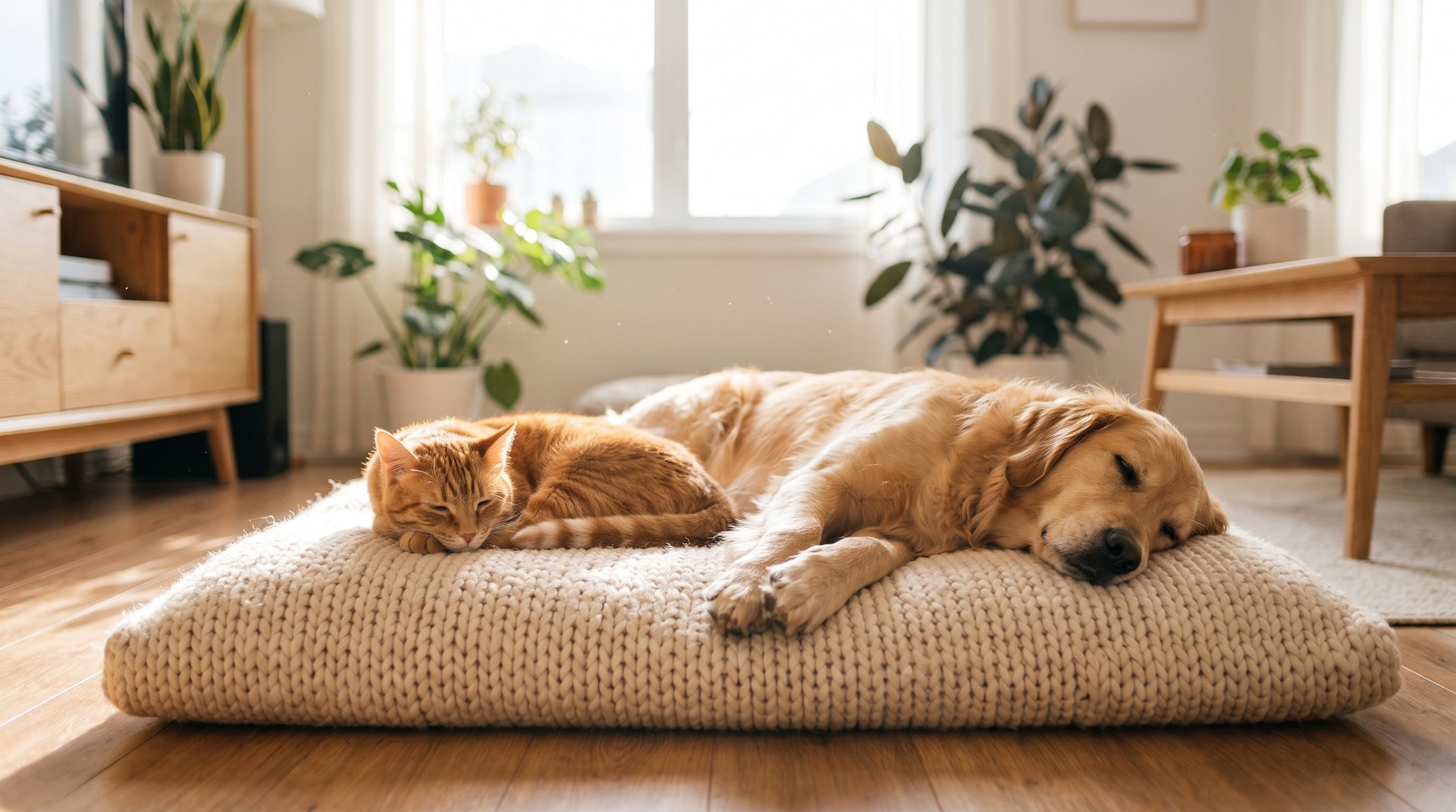
Is your pet sleeping too much? For most cat and dog owners in Kuwait, the answer is happily no. Cats and dogs are champion sleepers, and a lot of napping is normal. But a sudden jump in sleep, paired with low energy, less appetite, or weakness, can be your pet’s way of telling you something is wrong. This guide walks you through normal sleep by age, the red flags to watch for, and when it is time for a check-up.
How much sleep is normal for cats and dogs?
Sleep needs change a lot with age. The numbers below are healthy ranges, not warning signs. A cat curled up most of the day is usually just being a cat.
- Adult cats sleep about 12 to 16 hours a day. Kittens and newborns can sleep 20 to 22 hours, and senior cats often reach 18 to 20 hours.
- Adult dogs sleep about 12 to 14 hours a day, roughly 8 to 9 hours at night plus daytime naps. Puppies sleep 18 to 20 hours while growing, and senior dogs commonly need 16 to 18 hours or more.
- Big and working dog breeds tend to sleep more than small, busy ones, so the amount also depends on size, breed, and activity.
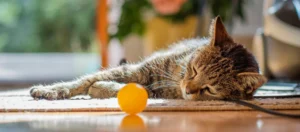
Cats also sleep in their own way. Instead of one long stretch, they take many short naps across the day and night. Most of that time is light sleep, so a cat can look fast asleep and still wake in an instant at a sound or a smell. That is why your cat can seem to sleep most of the day and still be perfectly healthy.
Sleeping a lot is not the same as lethargy
This is the most important idea in the whole article. Sleeping more is about quantity. Lethargy is about quality. A pet that sleeps a lot but wakes up bright, eats well, and greets you happily is likely fine. A lethargic pet stays dull and flat even when awake. It moves slowly, hides, and loses interest in food, play, walks, or you.
The best warning sign is a change from your own pet’s normal baseline, not a fixed number of hours. You know your pet better than any chart. If the change is sudden and comes with other signs, pay attention.
What can make a pet sleep more?
Many health problems show up first as a tired, sleepy pet. These cannot be told apart at home. They usually need a vet exam and bloodwork to sort out.
- Pain from arthritis, dental disease, or injury.
- Infections, whether viral, bacterial, or parasitic, and in cats FeLV, FIV, and upper respiratory infections.
- Anemia, kidney disease, diabetes, heart disease, liver disease, and some cancers.
- Thyroid disease, which looks different in dogs and cats (more on that below).
- Some medicines that cause drowsiness as a side effect.
Because the list is long and the signs overlap, please do not try to guess the cause or treat it at home. Never give human medicines. Common human painkillers like ibuprofen and paracetamol are toxic to cats and dogs and can be deadly, even in small doses.
Thyroid trouble: dogs and cats go opposite ways
Thyroid disease is a common reason for a change in energy, but it does not look the same in both species. Getting the direction right helps you know what to watch for.
- Dogs usually get an underactive thyroid (hypothyroidism). It slows them down, most often in middle-aged dogs around 6 to 7 years. Signs are lethargy, mental dullness, tiring easily, weight gain even with a normal appetite, feeling the cold, and a dull, thinning coat. It is treatable but not curable, with a daily thyroid pill for life.
- Cats usually get an overactive thyroid (hyperthyroidism), one of the most common hormone diseases in middle-aged and older cats. Signs are the opposite: weight loss despite a big appetite, more thirst and urination, restlessness, vomiting, and a messy coat. In late stages it can cause weakness. It is treatable with a good outlook.
A sleepy cat that stops eating is urgent
This one is not a wait-and-see situation. A cat that stops eating is at real risk. If a cat has not eaten for about 24 hours, it needs to be seen, and going two to three days without food can bring on a serious liver problem called hepatic lipidosis, or fatty liver. It can be fatal if it is not treated quickly, but the outlook is good when it is caught early.
So a cat that is sleeping more and has gone off its food needs a vet promptly, not days of watching at home. Do not try to fast a sick or overweight cat to reset its appetite. Please book online or give us a call the same day.
Could it just be old age, or could my pet be depressed?
Yes, pets do sleep more as they get older, and that alone is normal. But “they are just getting old” should not delay a check-up when other signs are present. Many conditions behind extra sleep in older pets, like kidney disease, thyroid disease, diabetes, and some cancers, respond far better to treatment when caught early.
Cats and dogs can also feel low after a loss, a house move, or a change in routine, and low mood can mean more sleeping, hiding, and eating less. The problem is that low mood looks almost exactly like physical illness and pain. That is why a vet must rule out a medical cause first. Do not assume your pet is only sad.
In older pets, watch for a flipped sleep schedule too. Cognitive dysfunction, a kind of pet dementia, can make a pet sleep more in the daytime and grow restless, confused, or vocal and pacing at night. It is worth a vet visit, because pain and other treatable problems can look the same.
Kuwait heat and your pet’s energy
In our hot months, pets do tend to rest more and stay quiet during the heat of the day, which is normal. But heat can also be dangerous. Sudden lethargy, heavy panting, drooling, or collapse in a hot car, yard, or room can be heatstroke. That is a life-threatening emergency. Move your pet to a cool place, wet it with cool, not ice-cold, water, offer small sips of water if it is alert, and get to a vet right away. Do not wait for it to pass with rest.
When to see the vet
Book a visit soon if the extra sleep lasts more than about 24 to 48 hours, especially when it comes with any of these:
- Low energy, weakness, or reluctance to move or play.
- Eating less or refusing food, or any weight change.
- More thirst or urination than usual.
- Vomiting or diarrhea.
Some signs mean go now, not book an appointment. Head to an emergency vet straight away if you see any of these:
- Gums that are pale, white, blue, or yellow.
- Labored or very fast breathing.
- Collapse or trouble standing.
- Seizures or tremors.
- A swollen, hard, or bloated belly.
- Being unresponsive or severely confused.
- Signs of heat stress, like heavy panting or collapse in the heat.
Before your visit, it helps to jot down a few notes so our team has the full picture. Write down how many hours your pet is sleeping compared to normal, how much it is eating and drinking, how often it is urinating, any vomiting, any weight change, and whether it responds normally when awake. These details help us find the cause faster.
Frequently Asked Questions
How many hours a day is it normal for a cat to sleep?
Healthy adult cats sleep about 12 to 16 hours a day. Kittens can sleep 20 to 22 hours, and senior cats often sleep 18 to 20 hours. A lot of sleep is normal for cats, so on its own it is not a red flag. Watch instead for a sudden change plus other signs like eating less or low energy.
Why is my dog suddenly sleeping so much?
A sudden jump in sleep can be normal after a busy day or in the heat, but it can also point to a health problem such as an underactive thyroid, pain, infection, anemia, kidney disease, diabetes, or heart disease. If the change lasts more than a day or two, or comes with low energy, appetite loss, or weakness, book a check-up so we can run the right tests.
Why is my cat sleeping more than usual and not eating?
This combination needs prompt attention. A cat that has not eaten for about 24 hours should be seen, and going two to three days without food can bring on a dangerous liver condition called fatty liver, which can be fatal without quick treatment but has a good outlook when caught early. Do not wait it out at home and do not try to fast your cat. Please book online or call us the same day.
How can I tell if my pet is just tired or actually sick?
A tired but healthy pet perks up when awake, eats normally, and greets you as usual. A sick or lethargic pet stays dull and flat even when awake, moves slowly, hides, and loses interest in food, play, and family. The key is a change from your pet’s normal self. When in doubt, a vet exam and bloodwork are the only safe way to know.
Not sure if your pet’s sleeping is normal or a sign of something more? Our team is here to help. Book online or give us a call, and we will take a careful look to give you peace of mind.