

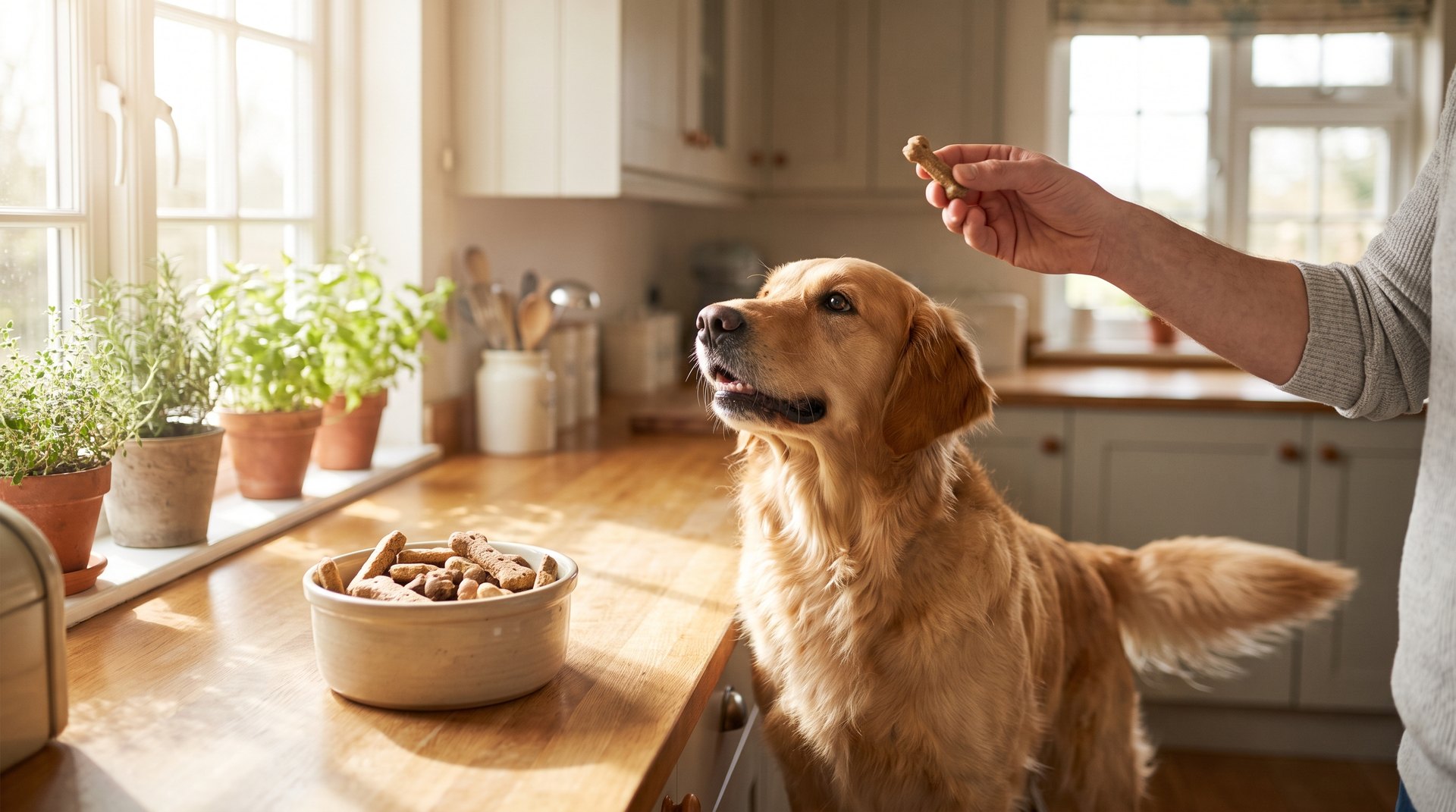
Handing over dog treats feels like love, and it is. But treats are also the easiest way to quietly overfeed a pet. The good news is there is a simple rule that keeps rewarding fun and safe: treats should never make up more than 10% of your pet’s daily calories. This guide shows you how to turn that rule into a real number for your own cat or dog, which foods to avoid completely, and how to keep training on track without an expanding waistline.
The 10% Rule, in Plain Numbers
Here is the core idea. Whatever your pet eats in a day, at least 90% of those calories should come from a complete and balanced food. Treats and extras get the remaining 10% at most. It is a calorie rule, not a handful rule. A big biscuit can blow the budget while ten tiny pieces might fit fine. Some vets suggest aiming closer to 5% as a safety buffer. Let us make it concrete:
- A 10 kg dog needs roughly 350 to 400 calories a day. That leaves only about 35 to 40 calories for treats, and a single large dog biscuit can be 100 calories or more.
- A typical indoor 4 kg house cat needs only about 200 calories a day. That leaves roughly 20 calories for treats, which is just 5 to 10 tiny treats.
That small allowance matters even more here. Kuwait’s heat keeps many cats and dogs indoors and sedentary for much of the year, so the calorie budget is smaller and treat discipline matters more, not less.
Why Over-Treating Causes Real Harm
Extra calories add up fast. Overfeeding a cat by just 10 calories a day, two or three pieces of kibble or one small treat, can add roughly a pound of body fat over a year. Carrying that weight raises the risk of diabetes, pancreatitis, arthritis, and a shorter life. But weight is not the only problem:
- Nutritional gaps. Treats are not complete and balanced. Too many dilute the protein, vitamins, and minerals your pet actually needs.
- Picky eating. Pets who fill up on treats start refusing their balanced meals, holding out for something better.
- Begging. Slipping a treat at unpredictable moments actually strengthens begging. The fix is scheduled, predictable treat times, plus rewards that are not food: play, praise, a few minutes of attention.
The Foods That Are Never Safe
Some foods are not just fattening, they are dangerous. Keep these away from pets entirely, in any amount:
- Xylitol (sometimes labeled “birch sugar”) can kill a dog. It is in some sugar-free gum, mints, baked goods, and even certain peanut butters. Never assume peanut butter is safe without reading the label.
- Grapes and raisins can cause sudden kidney failure in dogs.
- Chocolate, especially dark and baking chocolate.
- Onion, garlic, chives, and leeks. This is the big one for Kuwait: machboos, biryani, stews and gravy nearly all contain onion and garlic, so that little bit of leftover food is a hidden risk.
- Macadamia nuts, avocado, alcohol, coffee, raw bread dough, and very salty or fatty scraps.
- Never cooked bones. They splinter and can puncture the gut.
Healthier Dog Treats, Cat Treats, and Everyday Swaps
You do not need to buy anything special. Good low-calorie options include:
- For dogs: baby carrots, green beans, cucumber, apple slices (no core or seeds), blueberries, and plain air-popped popcorn.
- For cats: small amounts of plain cooked fish or meat, or a little steamed carrot. Cats are meat-eaters, so vegetables are optional extras, never staples.
For indoor pets stuck inside during the hot months, enrichment beats extra food. Snuffle mats, food puzzles, a frozen stuffed rubber toy, or a lick mat deliver reward and mental stimulation while slowing everything down.
Adjusting Treats During Training
- Treats come out of the budget, not on top of it. When you add treats, remove an equal amount of kibble from meals to keep the daily total steady.
- Use your pet’s own kibble as rewards. Measure the day’s ration into a jar each morning and reward from that all day.
- Break treats tiny. A dog is just as thrilled by a pea-sized piece as a big chunk.
- Average it over the week. On a heavy training day you can go over 10%, as long as you cut back on other days.
When to Call the Vet
If your pet eats anything toxic, act immediately, do not wait for symptoms. With xylitol, for example, dangerous drops in blood sugar can start within 30 to 60 minutes. Call your local emergency vet or a pet poison line right away, and do not try to make your pet vomit unless a vet tells you to. Also book a visit if your pet suddenly stops eating, especially in cats, where going even 1 to 2 days without food can be dangerous. Not sure how many treats are right for your pet’s size and weight? Our team can work out a personal daily calorie and treat budget, and check whether your pet is at a healthy weight. Book online or give us a call.
Frequently Asked Questions
How many treats can a dog have per day?
As a rule, treats should be no more than 10% of your dog’s daily calories. For a 10 kg dog that is only about 35 to 40 calories, which can be just a few small treats or one large biscuit. The rest of the diet should be a complete and balanced food.
Can too many treats make my dog or cat sick?
Yes. Over time, too many treats cause weight gain, which raises the risk of diabetes, joint disease, and pancreatitis. In the short term, rich or unfamiliar treats can cause vomiting or diarrhea. And some human foods (xylitol, chocolate, grapes, onion, garlic) are toxic in any amount.
What healthy treats can I give every day?
Small pieces of dog-safe vegetables and fruit work well: carrot, green beans, cucumber, apple without seeds, or blueberries for dogs; a little plain cooked meat or fish for cats. Break them small and count them inside the 10% budget.
What is the 7-7-7 rule for dogs?
It is not a standard veterinary rule. When it comes to treats and feeding, the number to remember is the 10% rule: treats should stay under 10% of daily calories, with the rest from complete, balanced food.