

Leaving your cat or dog while you travel is stressful, but a good pet hotel in Kuwait makes it far easier. The best way to keep the stay calm and safe is to prepare before drop-off day. This checklist walks you through vaccines, packing, ID, medications and anxiety, plus the local heat details most guides skip. Print it, tick it off, and you will hand over a happy, well-prepared pet.
Start With Vaccines, and Get the Timing Right
Reputable boarding places require proof of vaccination, and for good reason: it protects your pet and every other animal in the building. Get this sorted early, because vaccines need time to work.
Dogs need rabies, DHPP (distemper, hepatitis, parvo, parainfluenza) and Bordetella for kennel cough. Cats need rabies and FVRCP (herpesvirus, calicivirus, panleukopenia). Some places ask for Bordetella for cats too.
The timing matters more than owners realise:
- Give core vaccines at least two weeks (about 14 days) before check-in so immunity can build.
- Bordetella works best when it is not left to the last minute. The injectable takes about 14 days for full protection, and the very first time your dog gets it, it is a two-dose course, so book it at least two weeks ahead. The nasal and oral forms start working in about 3 to 5 days, so if check-in is close, ask your vet which is better.
- Never vaccinate on drop-off day, or your pet is unprotected during the stay.
Puppies and kittens should not board until they have finished their full core series, usually around 16 weeks of age. Bring your vaccination records with dates, not just a verbal “he is up to date.”
Pack Familiar Comforts, and Do Not Wash Them
Your pet’s own things carry your scent, which is calming in a new place. A common mistake is washing the blanket or toy first, so don’t. The smell of home is the whole point.
- A blanket or unwashed T-shirt that smells like home
- One or two favourite toys
- Their own regular food, pre-portioned into labelled bags with amounts and feeding times
That food rule is not fussiness. A sudden diet change is one of the most common causes of boarding-related diarrhoea, and stress already upsets a lot of pets’ stomachs. Keep the food identical to what they eat at home, and do not switch brands at drop-off.
Foods You Must Never Send
Some everyday foods are genuinely dangerous, so leave these off the packing list entirely:
- Xylitol, a sugar substitute in sugar-free gum, mints, some peanut butters and “diet” baked goods. It is deadly to dogs and can crash blood sugar as fast as 15 to 30 minutes after eating, sometimes with a delay of several hours.
- Chocolate, coffee and caffeine
- Grapes and raisins, which can cause kidney failure in dogs
- Onions, garlic and chives, toxic to both cats and dogs
- Macadamia nuts, alcohol, raw dough, very salty foods and dairy
For xylitol, chocolate, grapes and onion or garlic, the rule is simple: call a vet immediately, do not wait for symptoms.
Update ID, All of It
- A collar tag with a current phone number
- A microchip, and confirm the registry has your correct number, not an old one
- A temporary contact, a trusted person reachable while you are away, plus your travel dates
Hand Over Medications and Habits Clearly
Vague instructions cause missed or doubled doses. Put it in writing: each medication labelled with the exact dose and schedule, any conditions such as diabetes, seizures or heart issues, quirks and habits, and your vet’s details with a signed consent form for emergency treatment and a spending limit.
One safety point: do not give sedatives or calming medication before boarding unless your vet has specifically directed it. Sedatives can interfere with temperature control, a real risk in Kuwait’s heat and during transport.
Kuwait Heat: Transport Matters
- Never leave a pet in a parked car, even for a minute. In Gulf temperatures, heatstroke can turn fatal within minutes.
- Travel in the early morning or evening, and pre-cool the car before your pet gets in.
- To reduce car sickness, withhold food for about 3 to 4 hours before the trip, but never restrict water.
- Choose a fully air-conditioned facility with backup cooling.
Easing Separation Anxiety
The biggest favour you can do is keep goodbyes short, calm and unemotional. Long, anxious farewells and over-reassuring a distressed pet can teach them that leaving is something to fear. Stay relaxed, say a quick goodbye, and go, but never scold or punish nervous behaviour either.
If your pet has never boarded before, ask about a trial day or half-day stay first. A short practice run makes the first overnight far less frightening.
The One Emergency Every Cat Owner Must Know
If a male cat makes repeated trips to the litter box, straining with little or no urine, crying, licking himself or hiding, this is a life-threatening blocked bladder, not constipation or bad behaviour. It needs a vet within hours, not the next morning. This is exactly the kind of emergency trained staff at a vet-linked hotel are watching for.
Why Choose a Pet Hotel in Kuwait With a Vet On Site
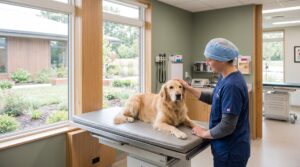
A pet hotel attached to a veterinary clinic gives you something a regular kennel cannot: staff trained to spot a blocked cat or a breathing change, correct medication handling, and access to your pet’s own medical records if anything goes wrong. It is a genuine safety layer, not an upsell.
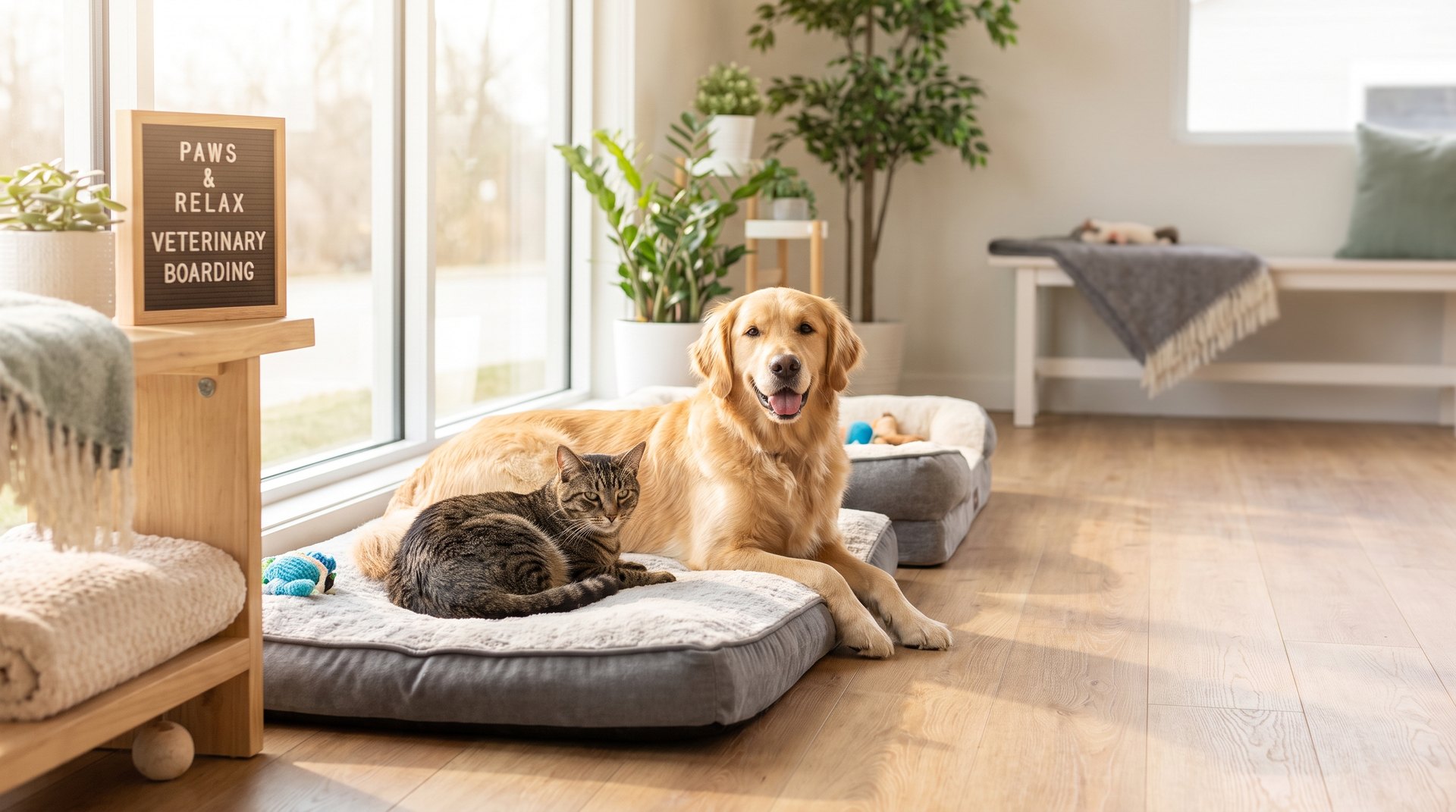
Our on-site pet hotel offers air-conditioned comfort, a vet team next door and the careful, unrushed handover this checklist describes.
Ready to book a safe, comfortable stay? Reserve your pet’s spot online or give us a call. Ask about a trial day, we are happy to help your cat or dog settle in before their first overnight.
Frequently Asked Questions
How far before boarding should my pet be vaccinated?
Give core vaccines at least two weeks before check-in so immunity has time to build. The injectable kennel-cough (Bordetella) vaccine also needs about two weeks, while the nasal or oral form works in a few days. Never vaccinate on drop-off day.
What should I pack for my dog or cat’s boarding stay?
Their own regular food (pre-portioned), a blanket or toy that smells like home and is unwashed, any medication with clear instructions, and their vaccination records. Keep it simple and label everything.
How do I reduce my pet’s separation anxiety at boarding?
Keep goodbyes short and calm, do a trial day beforehand if it is their first time, and send a familiar-smelling item. Most pets settle within a day once the routine feels safe.
Can my cat and dog board together?
Ask the facility. Many can house bonded pets together if they are comfortable sharing space, but some cats settle better in a quiet, separate area. Tell the staff their normal setup at home.