

When your pet is booked for surgery, the clinic will ask you to stop food the night before. It is a simple instruction, and it is easy to think it does not really matter. It matters a great deal. Fasting before anesthesia is one of the most important safety steps in the whole procedure, and it is entirely in your hands. One rule sits above everything else: follow the exact cutoff time your own vet gives you. The numbers below are general ranges only.
Why an Empty Stomach Protects Your Pet
When your pet goes under anesthesia, the body relaxes completely. That includes the muscles that normally keep food and stomach acid down where they belong. If there is food in the stomach, it can come back up while your pet is unconscious. Because the swallowing reflex is switched off under anesthesia, that material can be breathed into the lungs instead. This is called aspiration, and it can cause a serious lung infection or a life-threatening emergency during or after surgery. An empty stomach removes that risk almost entirely.
How Long to Fast Before Surgery: Food and Water Are Different
Old advice said “nothing to eat or drink after midnight.” Modern veterinary guidance has moved on, because we now know that fasting too long is its own problem. Food is a guide, not a prescription:
- Healthy adult dogs and cats: around 4 to 6 hours
- Puppies, kittens, very small breeds, and diabetic pets: often shorter, sometimes just 1 to 2 hours, on the vet’s advice
- Flat-faced (brachycephalic) breeds such as Pugs, French Bulldogs, and Persian cats: more prone to airway trouble, so your vet will fine-tune the timing and take extra airway care on the day
Water is treated differently from food. In most healthy pets, water is fine right up to about 2 hours before anesthesia, and sometimes it is not withheld at all. Please do not leave your pet without water all night. That advice is outdated and can leave your pet dehydrated in Kuwait’s heat.
Longer Is Not Safer
It is tempting to think a longer fast is the cautious choice. It is not. Fasting too long can make stomach contents more acidic and can actually increase reflux. For small dogs, puppies, kittens, and diabetic pets, a long fast can also drop blood sugar to dangerous levels. In cats, especially overweight ones, going too long without food can trigger a serious liver condition called hepatic lipidosis. Shorter, correctly timed fasting is the safe path, which is exactly why you follow your vet’s number and not a generic one.
Protecting the Fast at Home
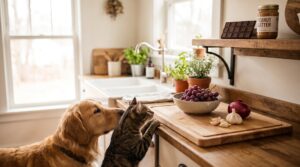
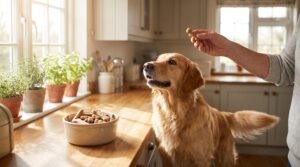
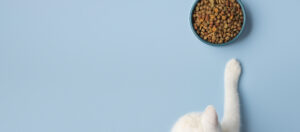
- Pick up all food bowls, not just the patient’s. In a multi-pet home, one pet easily eats another’s food overnight.
- Separate your pets overnight if they usually share space or bowls.
- Secure the trash and clear away any spilled or dropped food.
- Tell everyone in the house, including children and any household helper, that the pet must not be fed.
Two traps to avoid: do not give a “little something” to calm an anxious pet, and be careful hiding a morning pill in food. If you normally hide pills in peanut butter, check the label first, because some sugar-free peanut butters contain xylitol, which is poisonous to dogs.
Do Not Stop Regular Medications on Your Own
Fasting is about food, not medicine. If your pet takes ongoing medication for the heart, seizures, thyroid, or any chronic condition, do not stop it just because they are fasting. Ask your vet what to do with each regular medication. If your pet is diabetic, ask specifically about insulin and feeding on the morning of surgery, because the dose often changes when meals change.
If Your Pet Ate Anyway: Tell the Vet, Honestly
This is the most important thing in this article after the fasting itself. If your pet eats when they were not supposed to, call the clinic right away and tell them what they ate, how much, and what time it happened. Then let the vet decide. For most planned, non-emergency surgeries, the vet will simply reschedule to another day rather than risk anesthesia on a full stomach. A delayed surgery is a safe surgery. Please do not hide the slip-up out of embarrassment. Rescheduling is completely routine.
Foods That Are Never Safe, Fast or No Fast
- Xylitol (sugar-free gum, candy, some peanut butters, baked goods): a poisoning emergency for dogs. Call your vet or an animal poison line immediately.
- Chocolate, grapes and raisins, onions, garlic, chives, leeks, and macadamia nuts: all toxic. Cats are especially sensitive to onion and garlic.
Your Quick Pre-Surgery Checklist
- Write down your clinic’s exact food cutoff time
- Confirm the water rule for your pet
- Ask what to do about regular medications (and insulin, if diabetic)
- Save the clinic’s phone number for the “my pet ate” call
Every what-if here, whether your pet is very old, very young, has a health condition, or ate something overnight, has the same answer: call your vet. Booking a surgery or unsure about the fasting instructions? Our team is here to help. Book online or give us a call, and we will walk you through exactly what to do.
Frequently Asked Questions
Why are dogs fasted before surgery?
To protect the lungs. Under anesthesia the swallowing reflex switches off, so any food or acid in the stomach can rise up and be breathed into the lungs, a serious complication called aspiration. An empty stomach removes almost all of that risk.
Does fasting for pets include water?
Usually not in the same way. Food is stopped for several hours, but most healthy pets can drink water until about 2 hours before anesthesia. Follow your own vet’s instructions, and never leave your pet without water all night, especially in Kuwait’s heat.
My dog or cat ate before anesthesia. What should I do?
Call the clinic right away and tell them what, how much, and when. Do not hide it. For most planned surgeries the vet will simply reschedule, which is routine and far safer than operating on a full stomach.
What is the 2-4-6 rule for anesthesia?
It is a simple memory guide some clinics use for timing before anesthesia: roughly 2 hours for clear fluids and longer for food. Exact hours vary by pet and clinic, so always use the cutoff time your own vet gives you.